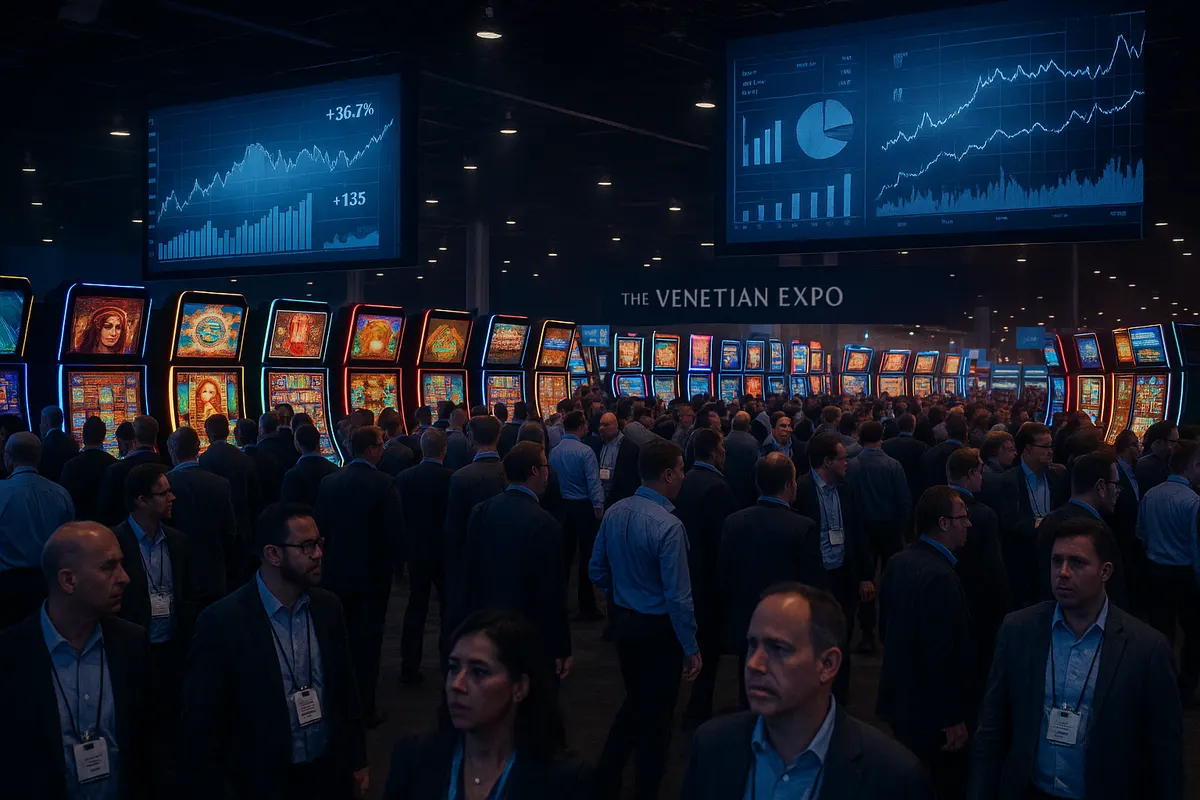
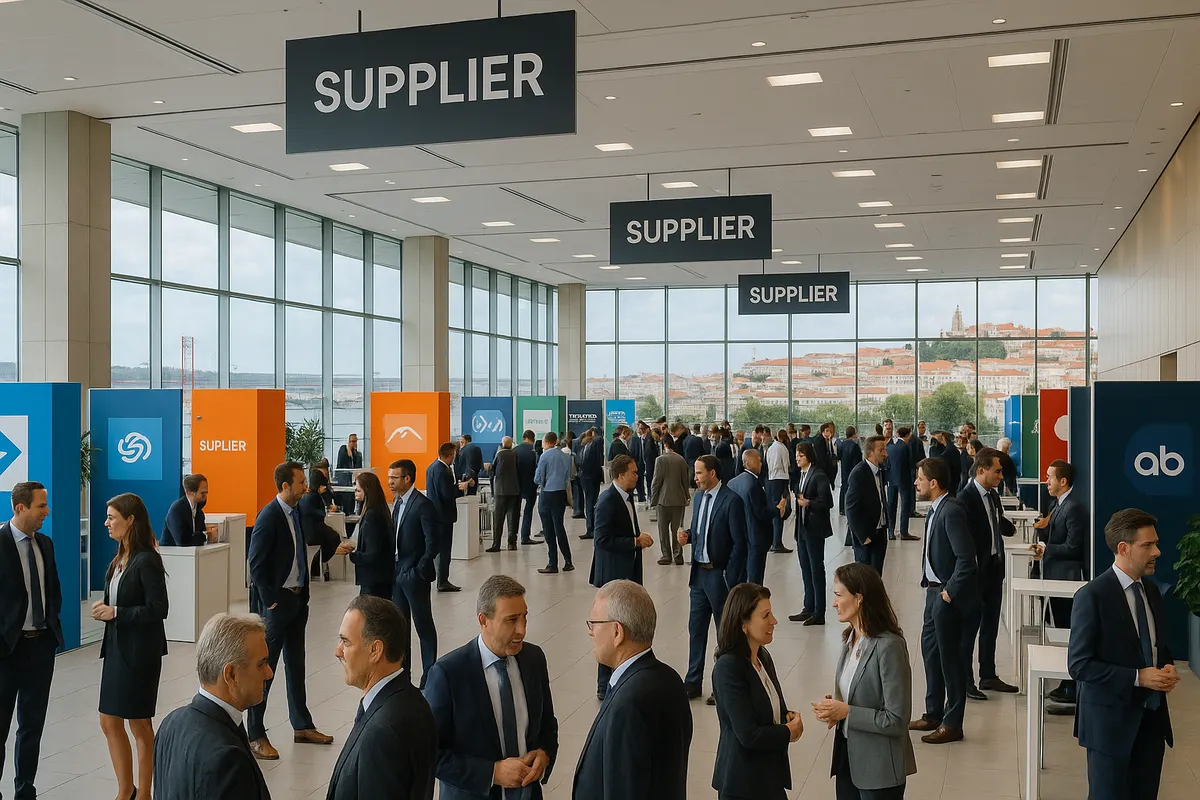
By the second coffee break on day one, the exhibition floor has already told you most of what you need to know. Three suppliers in a row are pitching AI-driven player support. The payments cluster has doubled in size since last year. A crowded panel on Brazil has overflowed into the corridor while the responsible gambling session two rooms over has empty seats. None of that is in a press release, and all of it is a signal.
That is the practical case for paying attention to SBC Summit Lisbon. The event returns to the Portuguese capital in 2026 for a third consecutive year, with local officials publicly backing the city’s role as host. Below is a working method for reading it, and events like it, for genuine industry direction rather than conference marketing.
SBC Summit Lisbon, in plain terms
SBC Summit is the flagship European event run by SBC (Sports Betting Community), a media and events company that also publishes industry news and organises regional shows across the Americas, Eurasia and Africa. It combines a large supplier exhibition with a multi-track conference programme and a dense schedule of evening networking. It moved to Lisbon from Barcelona and has stayed, which is itself a data point: organisers rarely relocate a profitable show twice.
Attendance figures for these events come from organisers rather than audited bodies, so treat headline numbers with the usual caution. What matters more is composition: the mix of operators, suppliers, affiliates, payment firms, law firms and regulators in the room sets the tone of every conversation.
The format: exhibition floor plus conference tracks
Expect three layers running in parallel across several days:
- Exhibition — supplier stands selling platforms, game content, sportsbook technology, payments, compliance tooling, CRM and affiliate services.
- Conference tracks — separate streams for sportsbook, casino and igaming innovation, marketing and affiliates, payments, compliance and player protection, plus regional market sessions.
- Networking — scheduled meeting areas, award ceremonies and off-site parties where most actual deal progress happens.
Who actually shows up
The attendee base splits roughly into buyers and sellers. Buyers are operators, from tier-one international brands to single-market startups, plus affiliates and media buyers. Sellers are platform providers, game studios, data and odds suppliers, payment processors, KYC and geolocation vendors, and the advisory layer of lawyers and consultants. Regulators and trade associations attend to speak and to listen. Investors circulate quietly.
Why Lisbon keeps winning the hosting rights for a major Portugal gambling event
Lisbon’s rise as a venue is less about Portugal being a large betting market and more about it being a workable one, in a convenient place, at a manageable cost.
Portugal’s regulatory position
Portugal has operated a licensed online gambling regime since 2015, supervised by SRIJ, the national gambling regulator under Turismo de Portugal. Licences cover online sports betting and online games of chance, and the market has steadily added licensed operators. That gives the event something many host cities lack: local authorities who treat the sector as a legitimate licensed industry rather than something to keep at arm’s length, which is why official welcomes for the show are worth noting.
Portugal is not a frictionless market. Sports betting is taxed on stakes rather than gross gaming revenue, a structure operators have criticised for years as a drag on competitiveness. That tension is useful at a conference: the host market’s own unresolved debates tend to surface on panels, and tax design is one of the recurring themes in European online gambling regulation discussions.
The logistics case
Lisbon offers a large purpose-built exhibition complex, direct flights across Europe, the Americas and Africa, hotel capacity at prices below Barcelona or London, and a compact city centre where an evening of three separate networking events is physically possible. For an industry whose growth markets are Latin America and Africa, a Western European city with strong Brazilian and Portuguese-speaking links is a sensible meeting point.
Step one: read the exhibition floor for iGaming innovation signals
Floor space is bought months in advance with real budget, so stand size and messaging are a reliable indicator of where suppliers believe revenue is heading. Walk it once without talking to anyone and take notes on repetition. If eight vendors are selling the same category, that category is either genuinely growing or already commoditised, and the pricing conversations on the stands will tell you which.
Product reveals at these shows cluster around a few predictable areas: new sportsbook front ends and in-play markets, crash and instant-win game formats, live dealer studios aimed at specific regions, AI tools for customer support and risk management, and retention and bonusing engines. Treat every “launch” as a claim until you see it running on a live operator site.
What to watch and what it usually means
A simple reading framework for the floor and the agenda:
| What you observe | What it usually signals | How to verify it |
|---|---|---|
| Several suppliers pitching the same tool category | Budget is shifting into that function; margins there will compress | Ask operators on the floor whether they have actually bought it |
| A region getting its own conference track | Organisers see commercial demand for market entry there | Check whether licensing in that market has opened or is imminent |
| Heavy compliance and player protection programming | Regulatory cost is rising in core markets | Compare with recent regulator consultations and enforcement |
| Payment providers expanding stand size | Local payment rails and deposit conversion are the current bottleneck | Ask which methods and which countries they are prioritising |
| Studios demoing region-specific game formats | Content localisation is where differentiation has moved | Look for the same titles in operator lobbies a quarter later |
Payments and fintech partnerships
Payments is consistently one of the busiest parts of a modern gambling trade show, because deposit success rates and withdrawal speed move retention more than almost any front-end feature. The conversations centre on local methods: instant bank transfer schemes, regional wallets, Pix in Brazil, UPI in India, mobile money across African markets. If you are tracking how deposits and cashouts are actually changing for players, the supplier floor is a better source than any vendor blog, and it pairs naturally with research into payment methods for online gambling.
Step two: use the regulatory sessions to map betting industry trends
Compliance panels are poorly attended relative to their value. They are where regulators, in-house counsel and trade bodies say out loud what is coming, usually six to eighteen months before it lands in a statute.
Three things to listen for. First, direction of travel on advertising and bonus restrictions, which has tightened across several European markets and directly shapes acquisition economics. Second, affordability and player protection requirements, including deposit limits, loss limits and intervention triggers, which change the cost of running a licence. Third, technical standards: reporting obligations, data localisation, certification of RNG and game content.
Cross-border sessions are where the discipline comes in. Operators tend to assume a model that works in one jurisdiction will port to another. Panels on Brazil, Africa or emerging European markets usually puncture that quickly, and the specific objections raised by local speakers are often the most useful notes you will take all week. A broader read on industry trend analysis helps you separate a genuine regulatory shift from a single consultation that goes nowhere.
Step three: work the show as a business development exercise
The networking value of a large event is real but it is not automatic. A workable approach:
- Book before you fly. Lock meetings two to four weeks out. Senior calendars fill first, and walk-up access to decision makers thins out by day two.
- Decide what you are buying or selling. One or two defined objectives beats a vague intention to “see what is out there”.
- Use panels as a filter. Speakers self-identify their priorities on stage. That is your qualification step before you approach them.
- Spend the evenings deliberately. Partnership conversations progress faster at a dinner than at a stand, and the award ceremonies concentrate senior attendees.
- Follow up within a week. Momentum from a show decays fast. Written next steps within five working days is the difference between a contact and a pipeline.
For market entry specifically, the practical value is in assembling the full stack in one place: a platform provider, a payment processor with local rails, a licensing lawyer, a compliance vendor and an affiliate partner. Meeting all five in three days is the main reason market entry teams justify the travel budget.
Frequently asked questions
What is SBC Summit?
SBC Summit is a large European sports betting and igaming conference and exhibition run by SBC, combining supplier stands, multi-track conference sessions and structured networking for operators, suppliers, affiliates and regulators.
Why Lisbon for iGaming events?
Portugal has a licensed online gambling market with a supportive official stance toward the event, and Lisbon offers a large exhibition venue, broad flight connectivity and lower costs than comparable Western European host cities.
What happens at iGaming conferences?
Product and platform launches, payment and technology partnership announcements, regulatory and compliance panels, regional market briefings, awards, and a large volume of commercial meetings.
How do conferences shape industry trends?
They concentrate buying decisions and regulatory signalling into a few days. Suppliers time launches to the show, operators benchmark vendors against each other, and policy direction discussed on panels often precedes formal rule changes.
One closing note on framing. Much of what gets announced at these events concerns retention, bonusing and conversion, and it is worth remembering that every commercial product in that stack operates against a built-in house edge. Nothing on an exhibition floor changes the underlying maths for players. If gambling has stopped being entertainment for you, deposit and loss limits, cool-off periods and self-exclusion are available at licensed operators, and national support services can help.