Here’s the myth worth killing before anything else: the sportsbook brand you log into almost certainly did not build the betting engine you’re using. The logo, the app colours, the welcome offer and the customer support agent belong to one company. The odds, the bet acceptance logic and the risk controls usually belong to another. Once you see that split, how sportsbook platforms work stops being a black box and starts looking like what it is, a supply chain.
FIRST.bet’s recent launch with Argentine operator group Grupo Slots is a tidy example to pull apart, because both halves of that supply chain are named in public. So let’s use it.
What is a sportsbook platform? The provider vs operator split
A sportsbook platform is the software and trading service that prices events, accepts bets, manages liability and settles results. The company that builds and runs it is the sportsbook provider, a B2B business with no consumer brand you’d recognise. The sports betting operator is the company that holds the licence, owns the brand, markets to players and takes the commercial risk on acquiring them.
In the Argentina case, FIRST.bet is the gaming technology provider and Grupo Slots is the operator group. The technology now powers the online betting offering of Grupo Slots’ Jugadon brand. If you placed a bet on that site, the name on your screen would be Jugadon. The engine underneath would be FIRST.bet.
Responsibilities vary by deal, but a typical fully managed arrangement divides up roughly like this:
| Function | Usually the platform provider | Usually the operator |
|---|---|---|
| Odds compilation and trading | Yes, often with its own trading team | May request markets or boosts |
| Bet acceptance and liability limits | Yes | Sets commercial appetite |
| Settlement of results | Yes, via data feeds | Handles disputes with the player |
| Front end and app look | Supplies the framework | Owns branding and layout choices |
| Licence and regulatory reporting | Must be approved as a supplier | Holds the licence, legally accountable |
| Deposits, withdrawals, KYC | Integrates the tools | Owns the money flow and compliance |
| Bonuses and marketing | Provides the promo engine | Funds and designs the offers |
| Customer support | Second line, technical | First line, talks to you |
That last row explains a frustration plenty of bettors have had. When a market gets voided or a bet is settled oddly, the support agent you’re chatting to often cannot change the decision, because the trading logic sits with the provider. Knowing who owns which lever saves you a lot of wasted typing.
Inside the FIRST.bet and Grupo Slots partnership
Grupo Slots is an established, regulated operator group in Argentina, not a startup testing the waters. It already had players, a brand and provincial licences. What it wanted from a first bet sportsbook deal was trading capability, risk management and localisation for Argentine players, delivered as a fully managed sportsbook engine. FIRST.bet’s founder and CEO Tom Light framed it bluntly in the announcement: a group like that bringing in a sportsbook partner isn’t swapping vendors, it’s buying trading and risk management that holds up.
From the operator side, Grupo Slots’ commercial manager Lucas Baffetti described the move as a growth play for Jugadon, strengthening gamification tools and user experience with the aim of better player loyalty, rolled out as a joint effort. Read those two quotes together and you’ve got the whole commercial logic of platform partnerships: the provider sells depth it can amortise across many clients, the operator buys depth it could never justify building alone.
The technical integration process
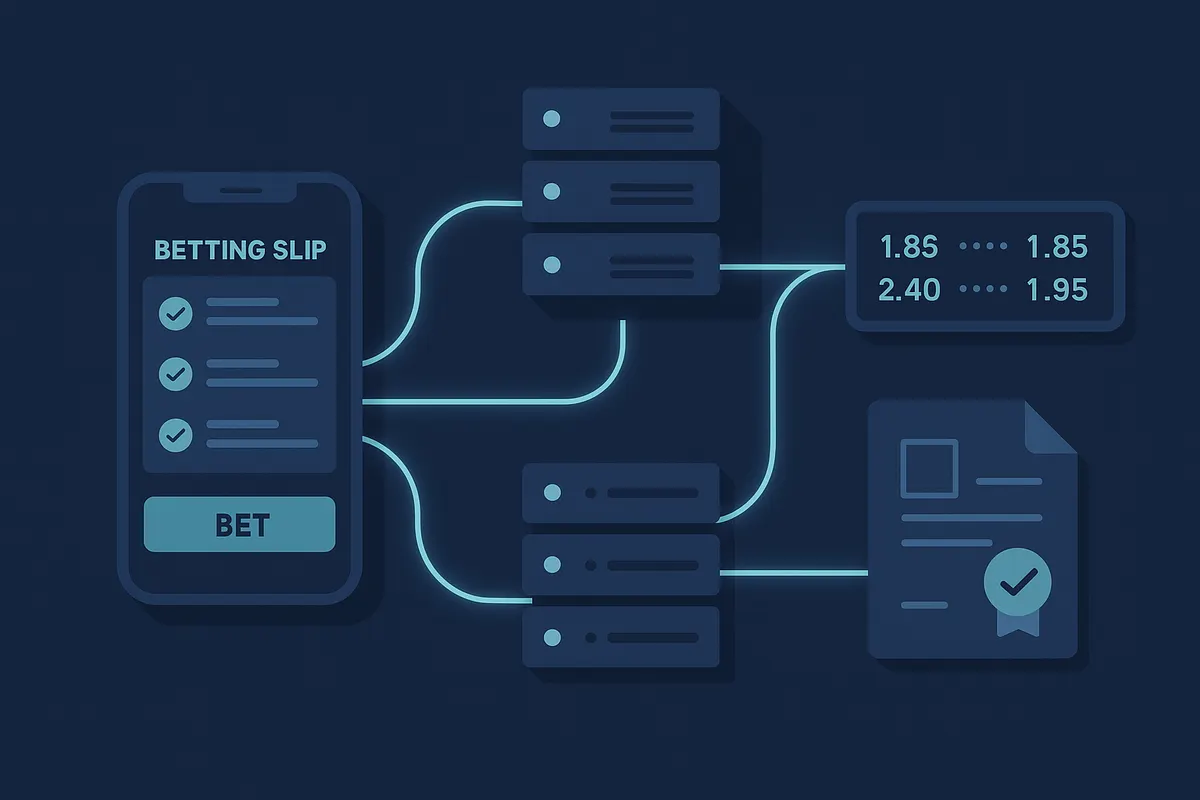
Platform integration is less glamorous than it sounds. Broadly, it runs in this order:
- Commercial and technical scoping. Which sports, which markets, which languages, which payment methods, what the revenue share looks like.
- Single wallet or separate wallet decision. A single wallet lets a player move between casino and sportsbook with one balance. That’s a real engineering job, because the operator’s existing player account system has to talk to the sportsbook engine in real time.
- API and front end work. Bet placement, cash out, settlement, bonus triggers and responsible gambling limits all have to pass cleanly between the two systems.
- Localisation. Local leagues weighted properly, local language, local payment rails, local time zones and tax handling.
- Testing and certification. Load testing, settlement accuracy checks, and whatever the regulator requires before go live.
- Soft launch, then full launch. Limits start tight and open up as the data comes in.
Timelines depend almost entirely on how much the operator already has. An operator with licences, a live casino brand and a payments stack can be live far faster than one starting from zero, which is why these deals so often land with existing operators rather than new entrants.
Licensing and regulatory approval
No regulator lets a platform go live just because two companies shook hands. Argentina’s online betting market is licensed province by province, so an operator’s permission to take bets exists in specific jurisdictions, not nationally. FIRST.bet’s deal with Grupo Slots added to its footprint inside that provincial framework, following an earlier entry into Argentina through a separate operator partnership.
Two approvals matter in most regulated markets. The operator needs a licence to offer betting to residents. The supplier needs to be approved or certified to provide the software behind it. That second step is what stops a licensed brand from quietly bolting on an uncertified engine.
For readers in India, the practical takeaway isn’t about Argentina’s rules, it’s about the question to ask: which authority licensed the site you’re using, and does that licence actually cover you? Casino and wagering regulation in India has historically sat at state level, but online gaming is now governed by a national law, the Promotion and Regulation of Online Gaming Act, 2025, in force since May 2026, alongside continuing state-level regulation of casino games. Plenty of sites serving Indian players hold licences issued somewhere else entirely. Check both the national rules and your own state’s position before you deposit anything.
How sportsbook platforms actually work, feed by feed
Strip an online betting platform down and you get four layers doing the real work.
Odds and market data
Prices start with data. Official or semi-official feeds deliver scores, lineups, possession, cards and ball-by-ball detail, with latency measured in fractions of a second for in-play markets. A pricing model turns that into probabilities, and the platform adds a margin, also called the overround, before publishing the odds.
That margin is the business model, and it’s worth being straight about it. Add up the implied probabilities of every outcome in a market and you’ll get more than 100%. A two-way market priced 1.90 and 1.90 implies 52.63% on each side (100 ÷ 1.90), 105.3% in total, and that 5.3% is the built-in edge. Tighter margins on headline markets, wider on obscure ones. Nobody prices a market to break even.
Risk management systems
Risk management is the part operators pay most for, and the part bettors notice most. The system monitors liability per event and per outcome, moves prices as money comes in, sets stake limits by market and customer, and flags unusual patterns. If a provider’s trading desk is thin, you see the symptoms: fewer in-play markets, slow suspensions, low maximum stakes and markets that stay closed after a goal when rivals have already reopened.
It also cuts the other way. Strong risk systems identify accounts whose betting pattern beats the published price and restrict their stakes. That’s standard industry practice, not a conspiracy, and it’s one reason “beating the bookmaker long term” is a far harder game than it looks.
Payments and user management
The operator usually owns this layer, with the platform integrating into it. Deposits, withdrawals, KYC checks, bonus wallets, segmentation, and responsible gambling controls such as deposit limits, session reminders and self-exclusion all live here. Localisation matters enormously: in India, a site without working UPI feels broken no matter how good its odds are, and withdrawal speed is almost always a payments and compliance question rather than a sportsbook engine one.
Build, buy or white label: the three routes compared
Operators have three realistic options, and the one they choose quietly shapes your experience.
| Route | Who controls odds and trading | Speed to launch | What you notice as a bettor |
|---|---|---|---|
| Build in-house | The operator, fully | Slowest, needs a trading desk | Distinctive pricing and features, but only the biggest brands pull it off |
| White label (brand on someone else’s licence and stack) | The provider, almost entirely | Fastest | Several “different” sites with identical odds, markets and bet slips |
| Licensed operator plus managed sportsbook engine | Shared, provider trades, operator sets appetite | Middle | Own brand and payments, provider-grade trading depth |
The verdict? For an established operator, the third route usually wins, and that’s precisely the shape of the FIRST.bet and Grupo Slots arrangement. Grupo Slots keeps its licence, its brand and its player relationships, and rents trading and risk capability it would take years and a specialist team to build. Pure white label is the cheapest way to get live and the weakest at differentiation, which is why you’ll find clusters of near-identical betting sites that share one engine. Building in-house only makes sense at serious scale.
Why this matters when you’re the one placing the bet
Because the provider sets the ceiling on what the brand can offer you. Odds quality, market depth, in-play coverage, cash out behaviour, how fast bets settle and how stable the app is under a Sunday night load all trace back to the engine, not the marketing. A sports betting operator can hand you a slicker app and a bigger bonus, but it cannot magically out-price the platform it rents.
Three habits are worth building off that. First, compare odds across sites on the same market rather than assuming a familiar brand is competitive, since sites sharing a provider will often quote the same price. Second, judge a sportsbook on settlement speed and limits, not on sign-up offers, because that’s where platform quality shows. Third, read the licence information in the footer and understand which entity is actually accountable if something goes wrong.
And the baseline on all of it: the margin is built into every price, which means betting costs money over time and is entertainment rather than income. Set deposit and loss limits, use the cool-off and self-exclusion tools the platform is required to provide, and stop if it stops being fun. If you want the groundwork first, our guide to sports betting basics covers odds and implied probability, and our sportsbook reviews look at how specific sites handle payouts and limits.
Frequently asked questions
What is a sportsbook platform?
It’s the software and trading operation behind a betting site: the system that prices markets, accepts and settles bets, manages liability and handles player accounts. It’s supplied by a B2B sportsbook provider, which is usually a different company from the brand you see.
How do sportsbook operators work?
An operator holds the gambling licence for a market, owns the brand, funds marketing and bonuses, handles payments and KYC, and talks to customers. Most license the betting engine from a provider rather than building it, then shape the commercial side on top.
What makes a sportsbook go live?
A licence valid in the target market, an approved supplier, a completed technical integration covering wallet, bet placement and settlement, localisation for language and payments, and passed testing. Launch then usually starts soft, with conservative limits that widen as data comes in.
Do two betting sites with the same provider offer the same odds?
Often very similar, yes, especially on major markets, because the pricing comes from the same trading operation. Operators can adjust margins, boosts and limits within the deal, so differences exist, but they’re usually smaller than the branding suggests.
Partnership details, including the Grupo Slots and Jugadon launch and quotes from both companies, as reported by Yogonet International.