iGaming trade shows explained, starting with the myth worth killing
No supplier at SiGMA Rome is building you better odds. That is the first thing to understand about iGaming trade shows: the technology on show changes how games look, load, pay out and connect to your bank, but it does not change the arithmetic underneath. A 96% RTP slot has a 4% house edge whether it is delivered through a ten year old integration or a shiny new unified API. Anyone selling you the opposite is selling.
With that out of the way, trade shows are genuinely useful to watch, because almost every feature you will meet in an online casino over the next year or two is being demonstrated at one right now, in a conference hall, to an operator with a budget. Below I walk through one real example end to end: Timeless Tech’s planned presence at SiGMA World 2026 in Rome, what the company is putting in front of operators, and how that kind of pitch ends up on your phone screen.
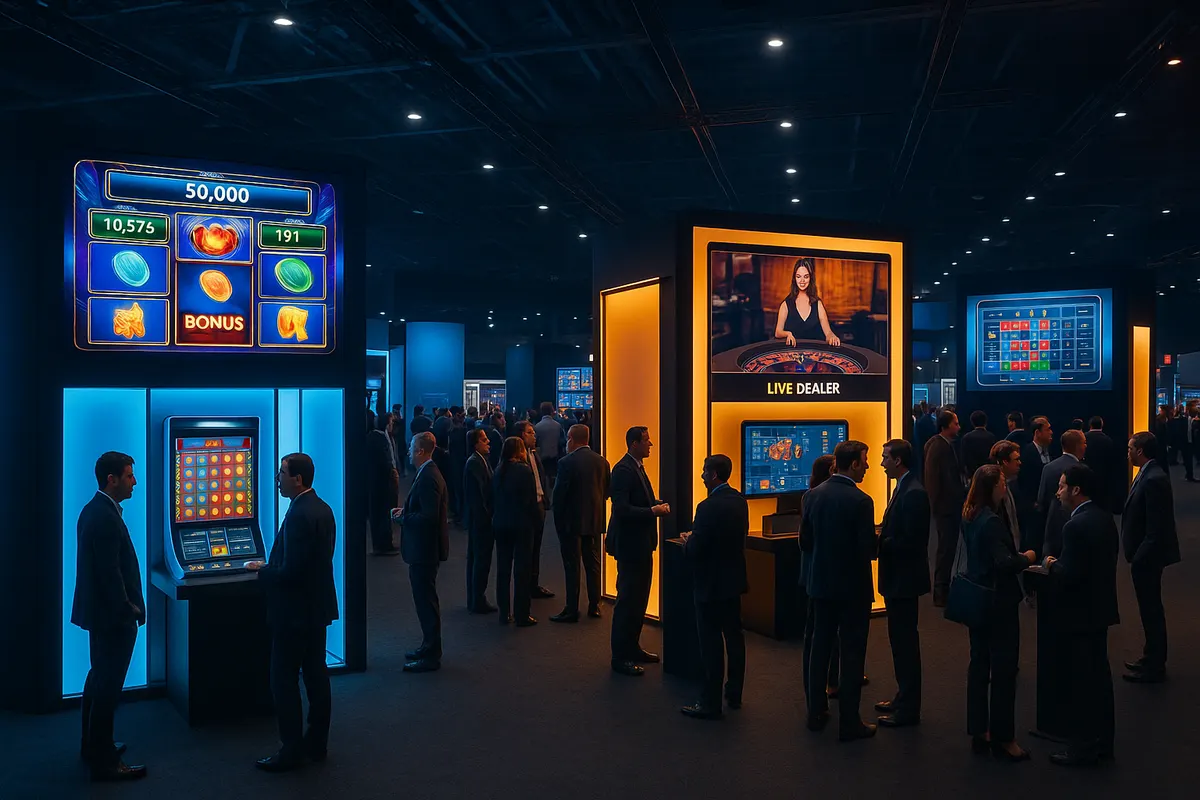
What actually happens at an iGaming trade show
Strip away the stage lighting and these events are a marketplace for business-to-business software. Three groups show up:
- Suppliers — game studios, aggregators, payment firms, platform and bonus-tool vendors — who rent stands and demo their products.
- Casino operators and affiliates, shopping for content, payment rails and platform features.
- Regulators, lawyers and compliance people, who increasingly set the agenda on panels.
Deals, not announcements, are the point. A game you play next spring probably started as a meeting at a stand, followed by an integration, certification in each market, then a staggered rollout. Players never see that chain, which is why trade show coverage reads like jargon. Translated, it is a preview of your future lobby.
SiGMA Rome 2026 as the working example
SiGMA World 2026 runs 2–5 November at Fiera Roma, and the organisers have put regulation front and centre. The theme is “Advancing Regulated Gaming”, and SiGMA said on 19 September that 65 regulators and regulatory representatives are expected to attend.
That single detail tells you more about where online casinos are heading than any product demo. When dozens of regulators share a venue with the commercial floor, the conversations suppliers prepare for shift. Operators stop asking only “what does this product do?” and start asking “can I launch it in this market, with these mechanics, under these licence conditions?” For players, the practical consequence is familiar: more identity checks, tighter bonus terms in regulated markets, clearer limit tools, and country-specific game lobbies where a title available in one jurisdiction simply does not appear in another.
Reading one stand: Timeless Tech’s casino product strategy
Timeless Tech is attending the Rome event with three connected products on the table: a game aggregator, a bonus engine and a betting exchange. Taken together they are a decent map of what suppliers think operators want to buy.
The aggregator: one integration, thousands of games
Timeless Tech’s Game Aggregator offers access to more than 17,000 games from over 140 providers through a single unified API, covering slots, live casino, crash games and other formats. An aggregator is plumbing. Instead of negotiating and integrating with 140 studios one by one, an operator connects once and can switch content on and off.
The player-side effect is the growth of enormous lobbies and the speed at which new titles appear, including small studios you have never heard of alongside the big names. Scale is not the same as quality, though, and the supplier itself frames it that way: the starting point is which content actually suits a casino’s audience and what deployment requires in each jurisdiction. Crash games getting explicit billing alongside slots and live casino is the other signal worth noting. A format that barely existed on operator roadmaps a few years ago is now a standard line item.
The bonus engine: mechanics around the games, not inside them
The Bonus Engine supports configurable tournaments, race mechanics, drop-and-win style events and progressive or mystery jackpots. This is the engagement layer, and it is where most visible innovation in online casinos now happens.
Read it honestly. A leaderboard race or a network jackpot sits on top of the same games with the same RTP, redistributing some of the operator’s marketing budget towards whoever plays most or luckiest. Prize drops can add genuine value; they can also pull you into more volume than you intended. The questions an operator asks about these tools are campaign objectives, permitted mechanics and operational control. The question you should ask is simpler: what are the wagering requirements, the game weighting and the maximum cashout attached to this promotion?
BetExchange: a different revenue model
The third product, BetExchange, is peer-to-peer betting with back-and-lay functionality, where the operator earns commission on winning bets rather than building a margin into the odds. Exchanges need liquidity to function, which is why they stay niche outside a handful of markets, but their presence in a supplier’s pitch shows operators looking for revenue models beyond the standard sportsbook overround.
From the stand in Rome to your screen
The path from demo to live product is slower and messier than press releases suggest. A realistic sequence looks like this:
- Meetings and shortlisting at the event itself, usually with a commercial case already half-written.
- Commercial agreement, which can take weeks or months.
- Technical integration into the operator’s platform, wallet and reporting.
- Certification and compliance per market, including testing-lab sign-off where the regulator demands it.
- Soft launch on one brand or one country, then wider rollout if the numbers hold.
Think in quarters, not weeks. Cosmetic changes such as a new game title or a tournament format land fastest. Anything touching money, identity or licensing moves slowest, because that is where the legal risk sits. And plenty of what is demoed never ships at all, which is the most reliable reason not to get excited by a stand’s marketing copy.
Technology areas worth watching at iGaming conferences
Across these events the same innovation categories come up year after year. Here is how each one typically reaches players, and how quickly.
| Area | What suppliers pitch | What you notice as a player | Typical lag |
|---|---|---|---|
| Payments | Local rails, faster payouts, automated checks | UPI and local methods on India-facing sites, quicker withdrawals once KYC clears | Medium |
| Live dealer technology | New studios, game show formats, localised tables | Hindi-speaking tables, Teen Patti and Andar Bahar alongside roulette and blackjack | Medium to long |
| Mobile gaming | Lighter clients, portrait-first design, app wrappers | Faster loading, one-thumb play, fewer crashes on mid-range phones | Short |
| Game mechanics | Megaways-style engines, cluster pays, crash and provably fair titles | New formats in the lobby, volatility options, bet-level choices | Short |
| Aggregation | Single API, thousands of titles | Bigger lobbies, unfamiliar studios, country-specific availability | Short |
| Regulatory compliance | Verification, affordability and limit tools | More document requests, deposit and session limits, reality checks | Long but unavoidable |
Notice the pattern: front-end features arrive quickly because they are low risk, while payment and compliance work drags because it involves banks and regulators. If you want to predict your gaming experience 12 months out, watch the compliance panels rather than the game trailers.
What to do with this as a player
Nothing here is a reason to deposit more. It is a reason to read a casino more accurately. A few practical habits:
- Check who supplies the games. A lobby with a wide spread of licensed studios usually means an aggregator integration and, with it, a reasonably current platform.
- Treat new formats on their numbers. Find the RTP and volatility in the game info panel before you decide a new mechanic is “better”. Novelty is not value.
- Read the promotion terms, not the banner. Tournaments and prize drops are marketing tools. Wagering multiples, game weighting and max cashout decide whether an offer is worth your time.
- Judge payouts by your own withdrawal, not the FAQ. Faster payment technology only helps once verification is complete, so get KYC done early.
- Welcome the boring features. Deposit limits, cool-off periods and session reminders come from the same roadmaps as the new games, and they are the part you should actually use.
Gambling has a negative expected return over time by design, and no amount of new technology alters that. Set a budget you are comfortable losing, use the limit tools your casino offers, and treat the industry’s product cycle as information rather than an invitation. If play stops feeling like entertainment, self-exclusion tools exist for a reason.
FAQ
What happens at iGaming trade shows?
Suppliers demo software to casino operators, deals get negotiated, and regulators and compliance specialists speak on panels. They are business-to-business events; players are not the audience, but the products on display shape what players see later.
How do trade shows affect online casinos?
They are where operators choose game suppliers, payment providers, platform tools and bonus systems. Those choices surface months later as new lobby content, new payment methods, redesigned apps and changed promotion mechanics.
What new casino technology is coming?
Judging by what suppliers are taking to events like SiGMA Rome: large aggregated game libraries delivered through single integrations, crash games treated as a mainstream category, configurable tournaments and network jackpots, peer-to-peer betting exchanges, and a steady build-out of verification and responsible-gambling tooling driven by regulation.
Does any of it improve my chances of winning?
No. RTP and house edge are set by each game’s maths and certified by testing labs. Technology changes delivery, presentation and convenience, not the long-run edge.